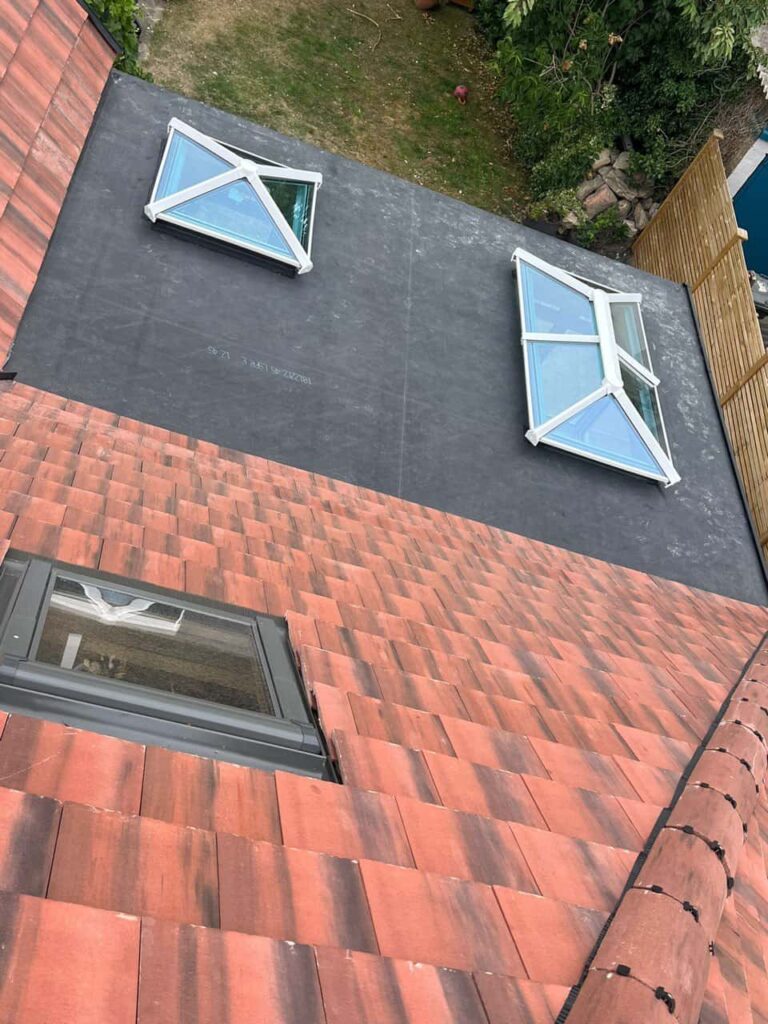
Understanding the Cause of Recurring Roof Tile Movement
A roof tile that slips once may have been disturbed by an isolated event. If the same tile or group of tiles repeatedly moves out of position, however, the problem is unlikely to be the tile alone. Recurring movement often indicates a fault involving the fixing, supporting batten, surrounding tiles or way the area has previously been repaired.
For property owners in Bedworth, Warwickshire, identifying the underlying cause is essential. Simply pushing a tile back into place may restore the roof’s appearance temporarily, but it will not prevent further movement if the support or fixing remains defective.
The Tile Fixing Has Failed
Depending on the roof design, tiles may be held by nails, clips, integral lugs or a combination of these. Over time, metal fixings can corrode, clips can loosen and tile lugs can crack.
A tile may remain in place through its weight and overlap with neighbouring tiles, but wind and vibration can gradually cause it to move. If the failed fixing is not replaced or repaired correctly, the same tile is likely to slip again.
The Supporting Batten Is Damaged
Roof tiles are supported by horizontal timber battens beneath the covering. The tile’s lug usually rests over the batten while additional fixings provide security where required.
If a batten has split, weakened or deteriorated, it may no longer hold the tile securely. A new fixing installed into unsound timber can also fail because it does not have a firm base.
Recurring tile movement may therefore require the surrounding covering to be carefully lifted so that the batten can be inspected. Repairing only the visible tile could leave the underlying weakness untouched.
The Tile Has a Broken or Worn Lug
The small projection on the underside of a tile helps it sit correctly on the batten. This lug can crack or break without the damage being visible from ground level.
A tile with a damaged lug may appear intact on its exposed face but gradually slide down the roof. Repositioning it will not provide a dependable repair because the component that supports its position is no longer effective.
The tile should be examined closely and replaced if it cannot be secured appropriately.
The Replacement Tile Is Not the Correct Match
Tiles of a similar colour or general shape are not necessarily interchangeable. Differences in profile, size, headlap and fixing position can prevent a replacement tile from sitting correctly within the existing covering.
An unsuitable tile may rock, sit higher than its neighbours or fail to overlap properly. Wind can then reach beneath its edges and encourage further movement.
A correct replacement should be compatible with the surrounding tiles and installed so that the roof’s intended alignment and water-shedding pattern are restored.
A Previous Repair Did Not Correct the Cause
A temporary repair may have returned the tile to its original position without dealing with the failed fixing or damaged support beneath it. Mortar, sealant or improvised materials may also have been used where a mechanical fixing was needed.
Although these methods can appear effective at first, they may not accommodate normal roof movement or prolonged weather exposure. Once the temporary bond weakens, the tile begins slipping again.
A lasting repair should address:
- Why the tile moved initially
- Whether its fixing has failed
- Whether the tile itself is damaged
- The condition of the supporting batten
- The alignment of neighbouring tiles
- Any water entry beneath the covering
This provides a more reliable solution than repeatedly treating the visible symptom.
Neighbouring Tiles May Be Applying Pressure
Roof tiles need to sit evenly within their rows. If nearby tiles are misaligned, damaged or incorrectly installed, they can prevent one tile from resting properly.
A tile placed under sideways pressure may gradually work loose as the roof responds to wind and temperature changes. The visible slipping tile may therefore be the consequence of a problem extending across a wider section.
Checking the surrounding courses helps determine whether a local alignment issue is contributing to the repeated movement.
Wind Is Reaching Beneath the Tile
A correctly aligned roof covering limits the amount of wind reaching the underside of each tile. Where a tile sits proud, overlaps poorly or has a damaged edge, wind can enter beneath it and create uplift.
This is particularly relevant when:
- The tile is close to a ridge, hip or verge
- An adjacent tile is missing or displaced
- Fixings are already weakened
- The tile profile does not match
- The roof has an exposed section
- Gaps have developed around previous repairs
Wind may not move the tile during every storm. Repeated smaller movements can gradually loosen it until it slips visibly.
Movement Elsewhere on the Roof Is Affecting the Area
Recurring tile displacement can occasionally indicate movement within a wider part of the roof. Sagging battens, uneven rafters or changes around roof junctions may alter how tiles sit.
Possible signs include:
- Several tiles becoming misaligned
- A dipping or uneven roofline
- Gaps changing over time
- Cracking around mortar details
- Repeated defects in the same section
- Water marks within the loft
These symptoms require a broader inspection because refixing one tile will not correct movement originating beneath the covering.
Why a Slipped Tile Should Not Be Ignored
A displaced tile interrupts the overlapping arrangement that directs water down the roof. Even if there is no immediate leak, the opening can expose underlay, battens and adjacent fixings to wind-driven rain.
Water may travel beneath the covering before appearing indoors, so an internal damp mark may not sit directly below the affected tile. A loose tile can also move further and disturb the materials around it.
Early assessment can reduce the likelihood of a local defect developing into a wider repair.
What a Professional Inspection Should Check
A professional roofer should inspect more than the position of the tile. The assessment may include:
- The condition and compatibility of the tile
- Nails, clips, lugs and other fixings
- Supporting battens
- Adjacent tiles and overlaps
- Accessible underlay
- Nearby ridges, hips, verges or valleys
- Evidence of previous repairs
- Signs of water penetration
- Movement across the surrounding roof
This helps establish whether the problem is confined to one fixing or connected to broader deterioration.
Conclusion
The same roof tiles usually keep slipping because the underlying cause has not been corrected. Failed fixings, broken lugs, damaged battens, unsuitable replacement tiles and poor alignment can all allow recurring movement. Wind may worsen the problem, but it often acts on a weakness that already exists.
If tiles on your Bedworth property repeatedly move out of position, Bedworth Roofing Repairs can inspect the affected section and identify why the problem is returning. Addressing the cause rather than repeatedly repositioning the tile provides a more dependable repair without suggesting unnecessary work.
Call us on: 024 7542 2296
Click here to find out more about Bedworth Roofing Repairs
Click here to complete our contact form and see how we can help with your roofing needs.