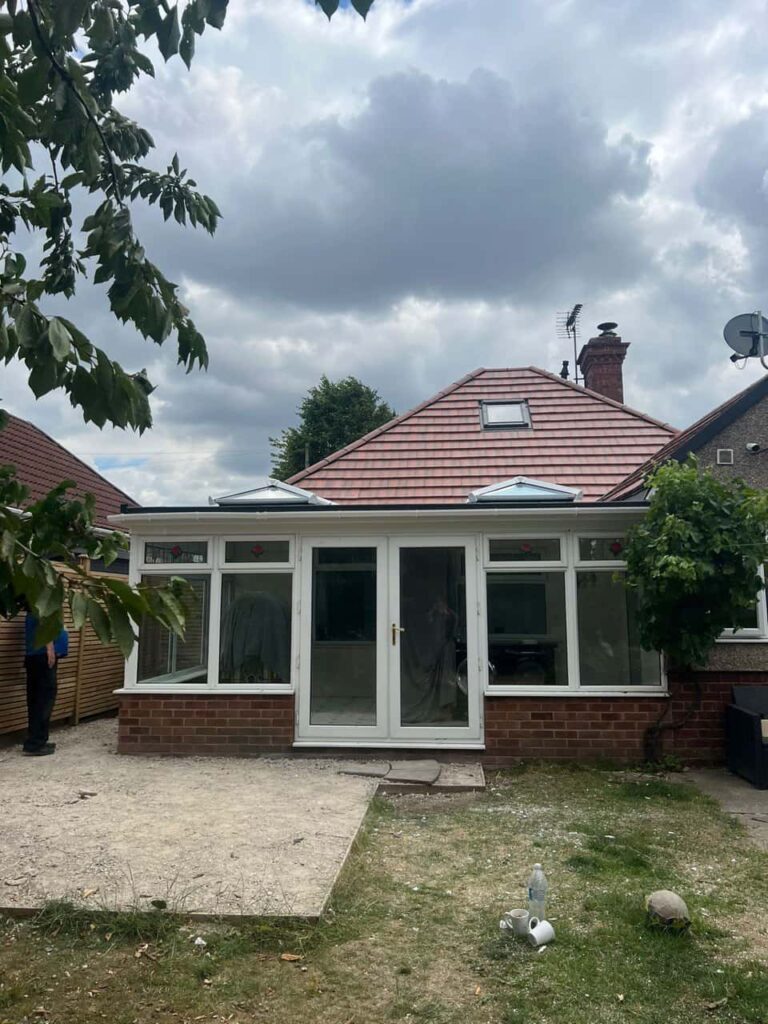
Water marks, damp patches and overflowing rainwater can indicate a guttering fault, roof damage or a combination of both. Because gutters sit directly beneath the roof covering, symptoms can appear close together and make the true cause difficult to identify.
For homeowners in Bedworth, Warwickshire, understanding the differences can help determine which part of the roofing system requires attention. However, water does not always appear directly beneath its entry point, so a professional inspection is often the most reliable way to establish the cause.
How to Distinguish Gutter Problems From Roof Damage
The location and timing of the symptoms provide useful clues. Problems concentrated around the roof edge and external walls often involve the guttering, while dampness inside the loft or on ceilings may indicate a defect higher on the roof.
Signs That the Gutters May Be Responsible
Gutters collect rainwater from the roof and direct it towards downpipes. Leaves, moss and other debris can restrict this flow, while damaged joints, poor alignment or loose brackets can allow water to escape.
Common indications of a gutter problem include:
- Water spilling over the gutter edge during rainfall
- Dripping from joints between gutter sections
- Sections that sag or hold standing water
- Damp streaks beneath the roofline
- Water running down external walls
- Overflow concentrated near a downpipe
- Green staining around gutter joints or outlets
If these symptoms become noticeable mainly during heavy rain, the system may be unable to carry water away efficiently.
Signs That the Roof May Be Damaged
Roof defects can allow water beneath tiles, slates or weatherproofing details. The water may then travel along the underlay, battens or timbers before appearing elsewhere.
Possible signs of roof damage include:
- Damp patches on ceilings or upper walls
- Moisture or staining inside the loft
- Discoloured or damp roof timbers
- Slipped, cracked or uneven tiles
- Deteriorated flashing around roof junctions
- Damage around ridges, verges or valleys
- Leaks that occur when rain comes from a particular direction
A complete-looking roof can still contain small cracks, lifted flashing or damaged underlay, so the absence of a missing tile does not rule out roofing damage.
Where the Water Appears Matters
Water running down the outside of the property directly beneath a gutter often points towards overflowing, leaking or misaligned guttering. Damp fascia boards and soffits can also result from water repeatedly escaping near the roof edge.
Internal water marks are more likely to involve the roof covering or a junction above them. However, overflowing gutters can sometimes force moisture into the eaves, while a roof defect can direct water towards the roofline.
The position of the stain is therefore a clue rather than definite proof.
The Timing of the Problem Can Help
A gutter blockage may not produce obvious symptoms during light rain. When rainfall becomes heavier, water can back up and overflow rapidly.
Roof leaks may also depend on weather conditions. A damaged tile or flashing detail might only admit water during wind-driven rain, while a valley defect may become apparent when a large volume of water flows from adjoining roof slopes.
Noting when the problem occurs can assist the inspection. Useful details include:
- Whether the leak happens in light or heavy rain
- The direction of the wind
- How quickly the damp patch appears
- Whether water continues dripping after the rain stops
- Which section of guttering is overflowing
This information can help narrow down the likely source.
Gutters Can Be Affected by Roof Deterioration
A blocked gutter is not always an isolated drainage problem. Moss, tile fragments and pieces of mortar may enter the gutter after falling from the roof.
If fresh roofing debris is found around outlets or on the ground, the roof covering, ridge details and mortar should also be inspected. Clearing the gutter may restore water flow, but it will not correct deterioration higher up.
Gutter Problems Can Affect the Roof Edge
Persistent overflowing can repeatedly wet fascia boards, soffits and the lower edges of the roofing system. Loose or incorrectly positioned gutters may also allow water to run behind them rather than into the channel.
Over time, this moisture can affect materials around the eaves. Addressing the drainage fault promptly helps prevent a relatively simple gutter problem from contributing to wider deterioration.
Safe Checks From Ground Level
Homeowners can often identify useful signs without accessing the roof. During rainfall, observe where water spills, drips or runs down the building. From a safe ground-level position, check for sagging gutters, displaced tiles and obvious debris.
Inside the property, inspect accessible loft areas for dampness, staining or daylight entering through gaps. Avoid walking on unsupported insulation or approaching wet electrical fittings.
Roof-level investigation should be completed by someone with suitable access equipment and experience.
Why Professional Diagnosis Is Important
Treating the wrong component can allow the original problem to continue. Sealing a gutter joint will not resolve damaged flashing, while replacing a tile will not correct a blocked outlet.
A professional inspection can assess the roof covering, eaves, gutters, downpipes and accessible internal areas together. This provides a clearer picture of how water is moving and whether one defect or several connected issues are responsible.
Conclusion
Overflowing water at the roof edge, leaking joints and external staining commonly point towards guttering problems. Internal dampness, damaged coverings and defects around roof junctions are more likely to indicate roof damage. However, the two systems are closely connected and can affect one another.
Bedworth Roofing Repairs provides professional roof and gutter inspections in Bedworth, Warwickshire. If you are uncertain where water is coming from, contact us to arrange an assessment and identify the appropriate repair.
Call us on: 024 7542 2296
Click here to find out more about Bedworth Roofing Repairs
Click here to complete our contact form and see how we can help with your roofing needs.